The Complete Guide to Awning Cleaning, Maintenance, and Long-Term Care
Dirty awnings hurt curb appeal fast. Awning Cleaning is the fix most homeowners forget until stains, mold, and fading make the whole patio look tired. This guide gives you a full, simple plan to wash, protect, and maintain your awning the right way, all year round.
Good awning cleaning habits do more than make the fabric look nice. They stop mold from eating into the weave. They protect the frame from rust. And they help you avoid an early, costly replacement.
Why Your Awning Gets Dirty So Fast
Awnings sit outside all day, every day. Rain leaves water spots. Wind blows dust and pollen onto the fabric. Birds leave droppings that stain deep if left too long. Add in tree sap, and you get a fabric that ages fast without care.
Without regular awning cleaning, dirt sits in the fibers and slowly breaks down the protective coating. This coating is what keeps water from soaking through and mold from taking hold underneath.
Tools and Supplies for a Safe Clean
Before you start, gather:
- A soft push broom or brush
- A garden hose with steady water pressure
- Mild dish soap or a fabric-safe cleaner
- A large sponge or soft cloth
- A step ladder for taller frames
- Old towels for drying edges
Skip strong bleach and harsh solvents. These break down fabric fibers over time and can strip the water-repellent finish most awnings come with from the factory.
A Simple Step-By-Step Cleaning Method
- Brush off dry dirt, leaves, and dust first.
- Wet the awning fully with your garden hose.
- Mix a small amount of mild soap into a bucket of warm water.
- Wash in gentle circular motions, section by section.
- Rinse thoroughly, making sure no soap film remains.
- Allow full air drying before folding or retracting.
Always test any cleaner on a small, hidden patch first. This protects against color bleeding or fabric damage on the visible parts of your awning.
How Do You Clean a Sunsetter Awning the Safe Way?
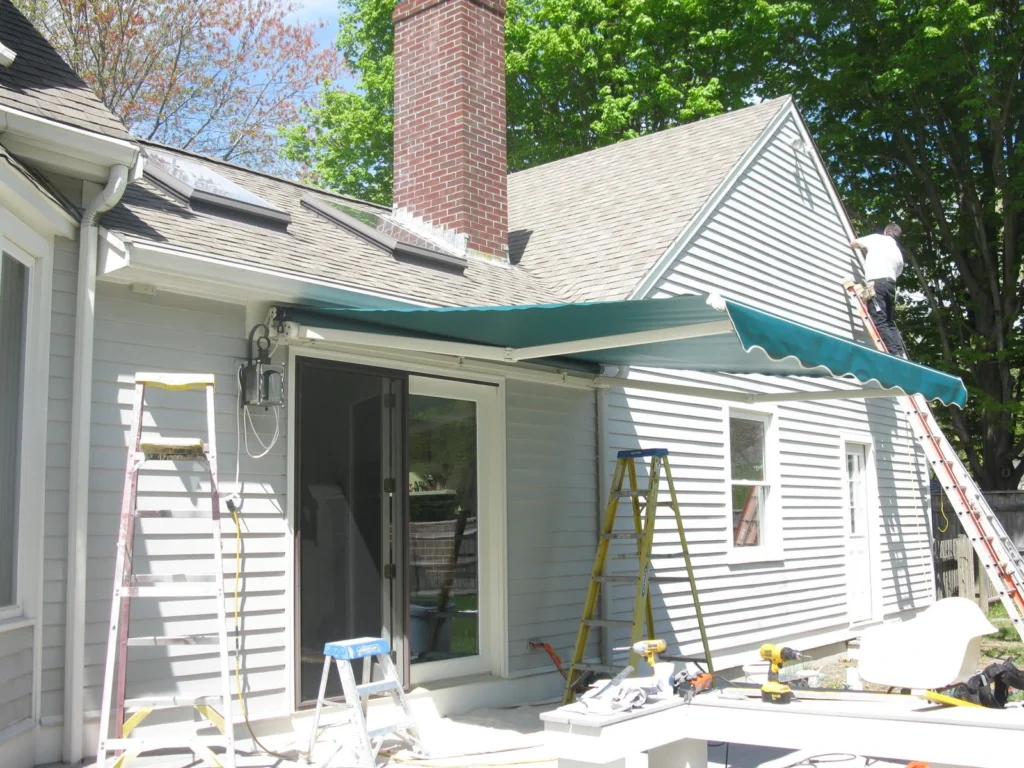
A common question we hear is how do you clean a Sunsetter awning without ruining the coating. The answer starts with timing: always extend the awning fully before cleaning. Scrubbing a folded or rolled awning traps dirt in the creases and can cause dark, permanent lines.
Use a soft sponge instead of a stiff brush on these coated fabrics. Gentle soap and water handle most dirt and light mildew just fine. Let the fabric dry all the way before retracting it, since trapped moisture inside the housing is one of the top causes of mold growth in retractable models.
How to Clean a Retractable Awning Without Damaging the Mechanism
Retractable models add a layer of complexity because of their moving arms and motor systems. Anyone learning how to clean a retractable awning should treat the mechanical parts and the fabric as two separate jobs.
For the frame, wipe down the arms and joints with a slightly damp cloth. Watch for grit buildup near hinges, since this can cause grinding noise or a stiff, slow motion over time. For the fabric, extend it fully, then use the same gentle soap method described above. Never point a hose or pressure washer directly at the control box or motor casing.
Ongoing Awning Maintenance Checklist
Awning maintenance is about small, regular checks rather than one big yearly job. Build this into your seasonal routine:
- Inspect the fabric for small rips or loose stitching.
- Check that the frame bolts are still tight.
- Look for rust spots on metal arms or brackets.
- Lubricate hinges and joints on retractable units twice a year.
- Trim back any branches hanging over the awning.
Staying on top of awning maintenance catches small issues while they are still cheap and easy to fix.
Treating Mold and Mildew Stains
Mold usually shows up as small black or greenish spots, often in the folds or shaded areas. A mix of one part white vinegar to four parts water works well as a natural treatment. Spray the solution, wait about fifteen minutes, then scrub gently and rinse fully.
Homes in humid or coastal areas often need this treatment more often. In these regions, Awning Cleaning should happen three to four times a year rather than the standard twice-yearly schedule.
Signs You Need a Professional Cleaning Service
Not every awning is safe to clean from a ladder. Tall commercial covers, older fabrics, and heavily stained awnings often need trained hands and the right tools.
Business owners with large storefront canopies often turn to Professional Awning Cleaning in Riverside CA for deep, soft-wash treatments that lift years of grime without harming stitching or fabric coating. This kind of service also spots hidden mildew growth under folds that a simple garden hose rinse would likely miss.
Homeowners dealing with patio or entryway awnings often prefer Residential Awning Cleaning in San Diego CA crews, since these teams use low-pressure tools built for delicate outdoor fabrics. This approach avoids the seam damage that can happen when a standard high-pressure washer is used on soft awning material.
How Often Should Cleaning Happen?
A twice-a-year deep clean, in spring and fall, works well for most homes. If your awning sits near trees, busy roads, or the coast, plan on cleaning every three months instead. A quick monthly rinse with plain water also helps keep dust and pollen from settling deep into the fabric.
Why Homeowners Trust JM Pressure Washers
At JM Pressure Washers, we treat every awning type differently, since canvas, vinyl, and mesh all need their own cleaning approach. Our crews use the right soap, the right pressure, and the right method for each job, so your awning comes out clean without any risk to the fabric or frame. Our goal is simple: awnings that look great and last for years.
Frequently Asked Questions
How often is professional awning cleaning needed?
Most homes only need awning cleaning by a pro once a year, with simple home washes handling the rest of the schedule.
How do you clean a Sunsetter awning without fading it?
Use mild soap, a soft cloth, and always clean the fabric while it is fully extended, never while rolled up.
What is the right way to learn how to clean a retractable awning?
Keep water away from the motor, clean the fabric section by section, and check the arm joints for dirt and rust regularly.
What does good awning maintenance include?
Regular checks on bolts, seams, and fabric tension, along with cleaning two to four times a year depending on your climate.
Can I pressure wash my awning myself?
Standard pressure washers are often too strong for awning fabric and can tear seams, so low-pressure or hand washing is safer.
Is it worth hiring a professional for awning cleaning?
Yes, especially for tall, hard-to-reach, or heavily soiled awnings, since professional tools and methods protect the fabric better than a rushed home wash.
Find trusted local businesses in your state.
Browse the directory