What Is Construction Clean Up? A Complete Guide to Post-Construction Cleaning Pros, Cons & Smart Decision Guide
Construction can transform an empty space into a home, office, store, or useful building. Yet, the work often leaves behind dust, scraps, stains, and fine particles. That final mess can make a finished space feel far from finished. Construction Site Cleaning Services focus on removing the leftover mess after building, remodeling, or repair work ends. It is not only about having organized rooms. Proper cleanup can also contribute to ensuring safer paths, better indoor air quality, and more effective handover. OSHA regulations dictate that construction zones should be kept free of any debris and hazardous materials. Additionally, EPA recommends paying special attention to dust management, ventilation, and proper cleaning of the area after renovation. Knowledge about this process will allow property owners to make wise decisions regarding time, expenses, and outcome.
1. What Does Construction Clean Up Really Mean?
Construction cleanup refers to cleaning up the dust, debris, markings, and remaining materials from construction. The cleanup process is normally done after major constructions have been completed. Construction cleaning can, however, be done at different phases of the construction process. According to OSHA, construction debris must not be in working areas, walkways, and stairwells. Cleanup is thus both aesthetically and functionally important.
The kind of work will depend on the property involved. For instance, a newly constructed house might need thorough cleaning. An interior remodel like a kitchen remodel may require cleaning in a limited area.
2. What Gets Cleaned After Construction?
Post-construction cleaning covers more than visible dirt. Fine dust can settle on surfaces far from the original work area. EPA guidance notes that remodeling can create dust and other pollutants that spread through indoor spaces. Therefore, clean up construction should consider both visible mess and hidden residue.
Common areas may include:
- Floors, stairs, and baseboards
- Windows, frames, and glass
- Doors, cabinets, and countertops
- Light fixtures and finished surfaces
- Bathrooms, kitchens, and utility areas
- Vents and accessible air-return areas
- Construction waste and packaging
Some cleanup tasks need extra care. Fresh finishes can scratch easily, while certain surfaces can react poorly to strong cleaners. Paint, grout, adhesive, and other materials may also leave stubborn marks.
A proper cleaning plan should match the surface and the type of residue. This approach protects the finished work while improving the overall appearance.
Most importantly, cleanup should leave the space ready for its next purpose. That could mean moving in, opening a business, showing a property, or completing a final inspection.
3. Who Handles Cleanup After Construction?
One common question asks, who is responsible for cleanup after construction? The answer depends on the contract, job scope, and agreement between the parties. Sometimes the construction crew handles basic debris removal. Other times, a separate cleaning team handles detailed post-construction work.
The contract should clearly explain what “cleanup” includes. Basic debris removal may not mean detailed dust removal. Likewise, sweeping a floor may not include cleaning windows, cabinets, fixtures, or fine surfaces. OSHA requires construction sites to maintain proper housekeeping during construction. However, contractual responsibility for final cleaning can differ from basic safety housekeeping.
That difference matters when planning time and costs. Clear expectations can prevent confusion near the end of a project.
4. Why Does Post-Construction Cleaning Matter?
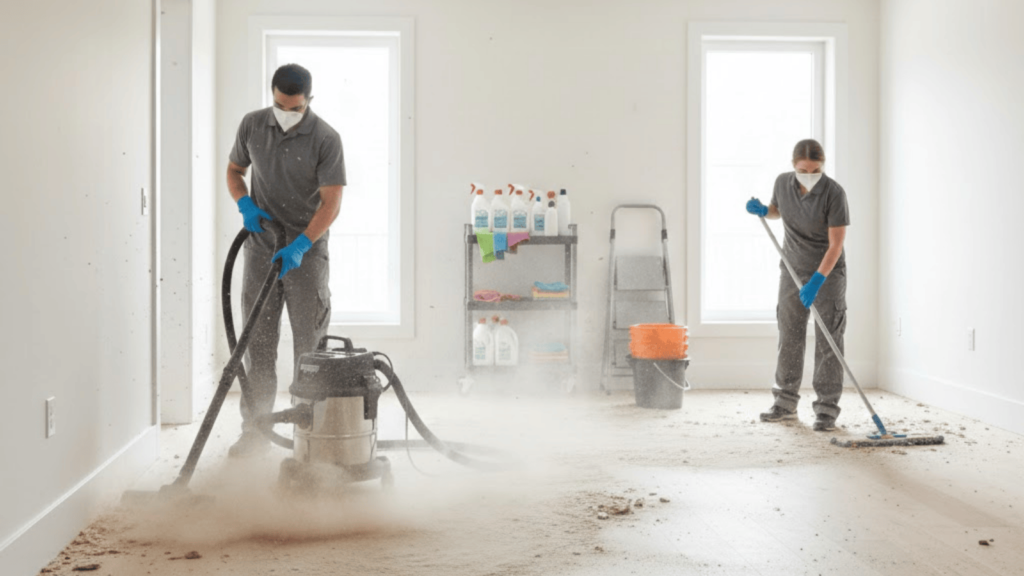
A finished building can still feel unfinished when dust covers the floors and debris fills corners. Therefore, post-construction cleaning can change how people experience the space.
The first benefit involves appearance. Clean surfaces allow new flooring, paint, cabinets, fixtures, and other finishes to stand out. A clean space also creates a better first impression for visitors, tenants, buyers, and staff.
The second benefit involves indoor conditions. Construction can release dust and other particles into indoor spaces. EPA recommends controlling dust, containing pollutants, and providing ventilation during remodeling work.
The third benefit involves safety. Loose scraps and debris can create trip hazards. OSHA specifically requires debris and scrap materials to remain cleared from work areas and passageways.
This makes Construction Site Cleaning Services useful beyond simple appearance. They can support a smoother transition from construction to everyday use.
Most importantly, detailed cleanup can reveal missed defects. Once dust and debris disappear, scratches, stains, damaged finishes, or incomplete details become easier to notice.
5. The Pros and Cons of Construction Cleanup
Every cleanup choice has advantages and tradeoffs. Understanding both sides can make the decision easier.
Benefits of Professional Post-Construction Cleaning
Cleaning services can offer time savings to property owners. Dust from the construction process will normally get to hard-to-reach places. This thorough cleaning will help lessen the workload of construction laborers or property owners.
The next advantage is that of consistency. A cleaning crew is only responsible for cleaning. They do not have to do the work of the construction team.
Possible Downsides
Cost is the major factor that comes to play here because the cleaning process requires money. Depending on the state of the building, the dirt in it, surface type, and other factors, the cleaning process will come with its own costs.
Timing is important too because carrying out the cleaning process before the building project is completed may result into redoing some things. This calls for the cleaning process to be done at the right point. It could lead to some dust remaining or too much cleaning being done on a simple job.
6. Construction Cleanup vs. General Cleanup
General cleanup usually refers to routine cleaning that keeps an occupied property presentable. Construction cleanup has a different purpose. It deals with residue created by building, remodeling, installation, repair, and finishing work. Routine cleaning may involve dusting, vacuuming, mopping, and bathroom cleaning. Post-construction cleaning may involve drywall dust, sawdust, adhesive residue, packaging, paint marks, and construction debris.
The difference becomes clearer after a major renovation. Normal household cleaning may remove everyday dirt. It may not address fine construction dust settled inside cabinets or along unfinished edges.
For example, Construction Site Cleaning Services may cover detailed cleaning after flooring installation. They may also address residue around new windows, doors, fixtures, and cabinets. The right choice depends on the condition of the property. A lightly renovated room may need limited cleaning. A newly built property may require a much deeper final cleanup.
7. How Much Does Construction Cleanup Cost?
Construction cleanup costs can vary widely. No single price fits every property because several factors affect the workload. Property size matters first. A small bathroom renovation generally creates less cleaning work than a new commercial building. The amount of dust and debris also changes the workload. Surface type matters as well. Glass, polished surfaces, unfinished materials, tile, wood, and other finishes may require different care. Heavy residue can also increase labor time.
Location can affect local pricing too. For example, Construction Cleanup in Deerfield Beach, FL may have different market rates than similar work elsewhere.
Consider these cost factors:
- Property size and layout
- Amount of construction debris
- Dust and residue levels
- Number of rooms or floors
- Type of finished surfaces
- Window and glass cleaning needs
- Final inspection requirements
- Local labor conditions
A detailed quote should reflect the actual condition rather than rely only on square footage.
For homeowners, Residential Construction Cleanup Boca Raton, FL can involve kitchens, bathrooms, living spaces, bedrooms, garages, or additions. Each area may create different cleaning needs. Therefore, compare the scope of work rather than focusing only on the lowest quoted price.
8. How to Choose the Right Cleanup Approach
The best cleanup approach depends on the project’s size, condition, and final use. A small repair may need simple cleaning after the contractor finishes. A full renovation may require a more detailed post-construction service.
Start with the condition of the space. Look for visible debris, fine dust, residue, stains, and unfinished areas. Then consider how soon people need to use the property.
Safety deserves equal attention. OSHA emphasizes regular debris removal and clear work areas. EPA also recommends cleaning work areas before occupants return after remodeling.
For properties in different areas, local needs can vary. Safe Construction Site Cleaning Hollywood, FL may involve different property types and local conditions than residential cleanup elsewhere. Also, check the contract before assigning responsibility. The builder may already include debris removal. Detailed cleaning may remain a separate responsibility.
Ultimately, choose the cleanup level that matches the property’s condition and intended use. The goal should remain a clean, safe, usable space without paying for unnecessary work.
A Cleaner Finish Can Shape the Next Chapter
Construction marks the beginning of something new, but cleanup helps reveal the finished space. Dust, scraps, residue, and debris can hide the value of careful building work. A thoughtful cleanup brings those details back into view.
Construction Site Cleaning Services can support safer passageways, cleaner surfaces, and a more comfortable transition into the finished property. EPA guidance supports dust control, ventilation, and thorough cleaning as important parts of renovation work.
The smartest choice depends on the project’s size, budget, contract, timing, and cleaning needs. Basic cleanup may suit a small job, while detailed cleaning can make sense after major construction.
For local property owners considering Paul’s cleaning services of broward, the same principle applies: compare the scope, understand the work included, and choose based on the property’s actual condition.
FAQs
1. What is construction cleanup?
Construction cleanup is the elimination of dust, debris, packaging materials, residue, and other items that result from construction or renovations.
2. When is post-construction cleaning supposed to be performed?
Final cleaning is usually performed once major construction tasks are completed. But sometimes some amount of cleaning can be done during the construction period.
3. Is construction cleanup different from regular cleaning?
Yes, it is different. Regular cleaning covers normal cleaning and household dirt, while construction cleaning refers to the elimination of construction-related materials and residue.
4. Whose responsibility is it to pay for post-construction cleaning?
This is the issue that is regulated by construction contracts. Contractors perform some cleaning services and leave others for additional payment.
5. Why is construction dust an important issue?
Construction dust can be spread throughout the rooms and surfaces. EPA suggests managing the dust and pollutants in order to ensure good indoor air quality.
Find trusted local businesses in your state.
Browse the directory